The AI space is in a really weird spot right now. We're still getting advances but they're being held up due to cybersecurity risks. The data center conversation is about as negative as it's ever been, even if most people don't really know what data centers do.
And, inside the AI world, people are really mad at Anthropic because they think the company wants to be the only AI company. This Gavin Baker clip from the All In podcast went viral on Friday and brought that conversation to the forefront:
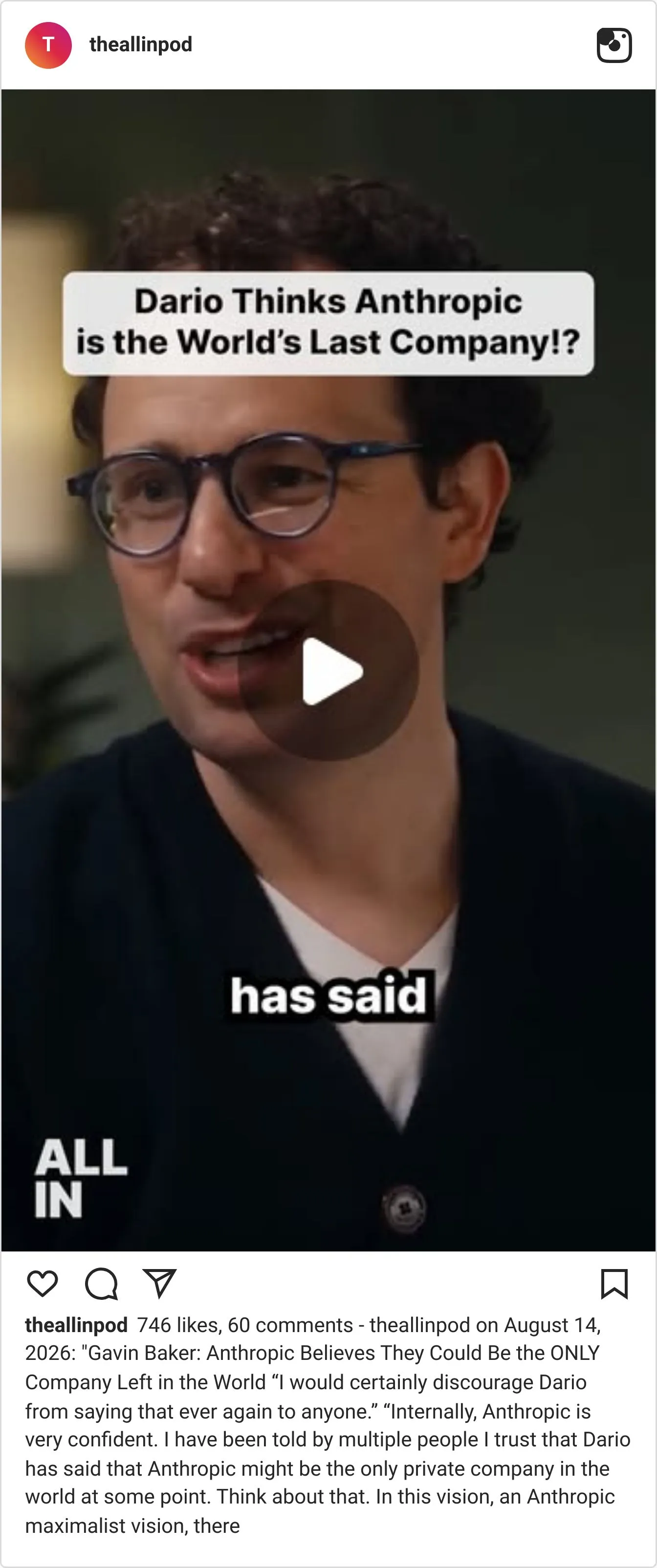
Quick catch-up if you don't live on AI Twitter: Baker is a big-name tech investor, and his claim, sourced to "multiple people I trust," is that Anthropic privately believes it could end up the last AI company standing, and that CEO Dario Amodei's public warnings about AI risk are fueling the backlash against the whole industry.
This sounded like BS to me, and Dario himself replied in two long posts over the weekend. While this might sound like inside baseball, it's worth your time to read and ingest what he's saying.
Let's get into it.
What Dario Said & Why It Matters
The posts are long (like, blog-post long) but they boil down to two arguments. One is about regulation. One is about vibes.
Let's start with regulation.
Baker's argument, and a lot of Silicon Valley's, goes like this:
Big companies love regulation because they help write the rules. The rules get expensive to follow, the little guys can't keep up, and the big guys win.
That's what people mean when they say "regulatory capture."
Dario says that's not what's happening here. According to him, the rules Anthropic has backed are actually written to go easier on small companies. California's big AI safety law (SB 53, which Anthropic supported) doesn't even apply to companies making less than $500 million.
And the government safety testing they've pushed for is aimed at the biggest models, like their own, not the up-and-comers.
In his words, that approach "hurts the business interests of the frontier labs and helps challengers, including open-weights."
Then he makes a bigger point: AI concentrates power all by itself, no regulation required. Whoever has the most compute and chips wins.
Even free, downloadable open-weights models don't change that, because someone still has to pay for the giant data centers that train and run them. To Dario, good rules of the road are the only real way to keep the big AI companies in check, including his own.
Okay, now the vibes post. This one is more personal.
Dario pushes back hard on the doomer-in-chief label. He points out that he wrote Machines of Loving Grace, his big essay about how AI could help cure most human disease in the next decade, because he didn't think the industry was painting an inspiring enough picture.
But the part that stuck with me is the trust argument.
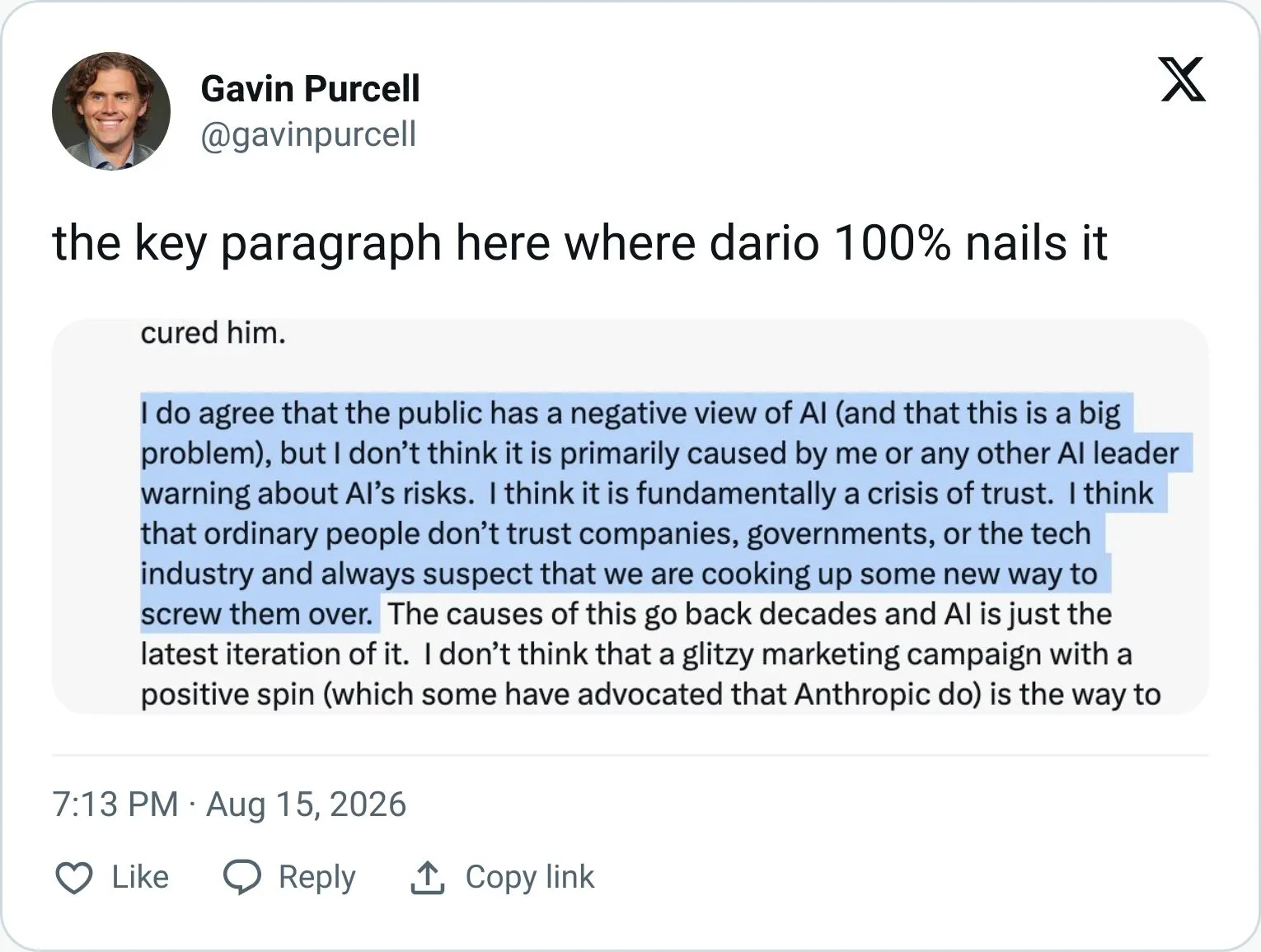
Dario doesn't think the public is souring on AI because he or other AI leaders talk about risk. He thinks people stopped trusting big institutions a long time ago: "ordinary people don't trust companies, governments, or the tech industry and always suspect that we are cooking up some new way to screw them over."
And then he lands on maybe the most candid thing a frontier lab CEO has said in public. The most accurate criticism of AI companies "is that we haven't yet delivered on our big promises to benefit the world. That is totally on us."
All of this matters right now because AI is caught in that in-between world.
We keep being told that it's going to deliver us these incredible advances but nothing has really materialized yet.
As Dario says, we're being told AI is going to cure cancer but... AI has not cured cancer. Yet.
Why This Matters To You
If you're reading this, you're more than likely further along on your AI journey than most people. You've found ways to make AI useful in your regular life like I have.
But most people aren't you. The vast majority see AI as a better search bot for now. It's not improving their daily life.
I've personally found this stretch frustrating to make content about, mostly because it's hard to understand what people resonate with when it comes to AI right now.
I want to keep learning how these cool tools operate and get better with them, but it feels more and more like the public at large does not.
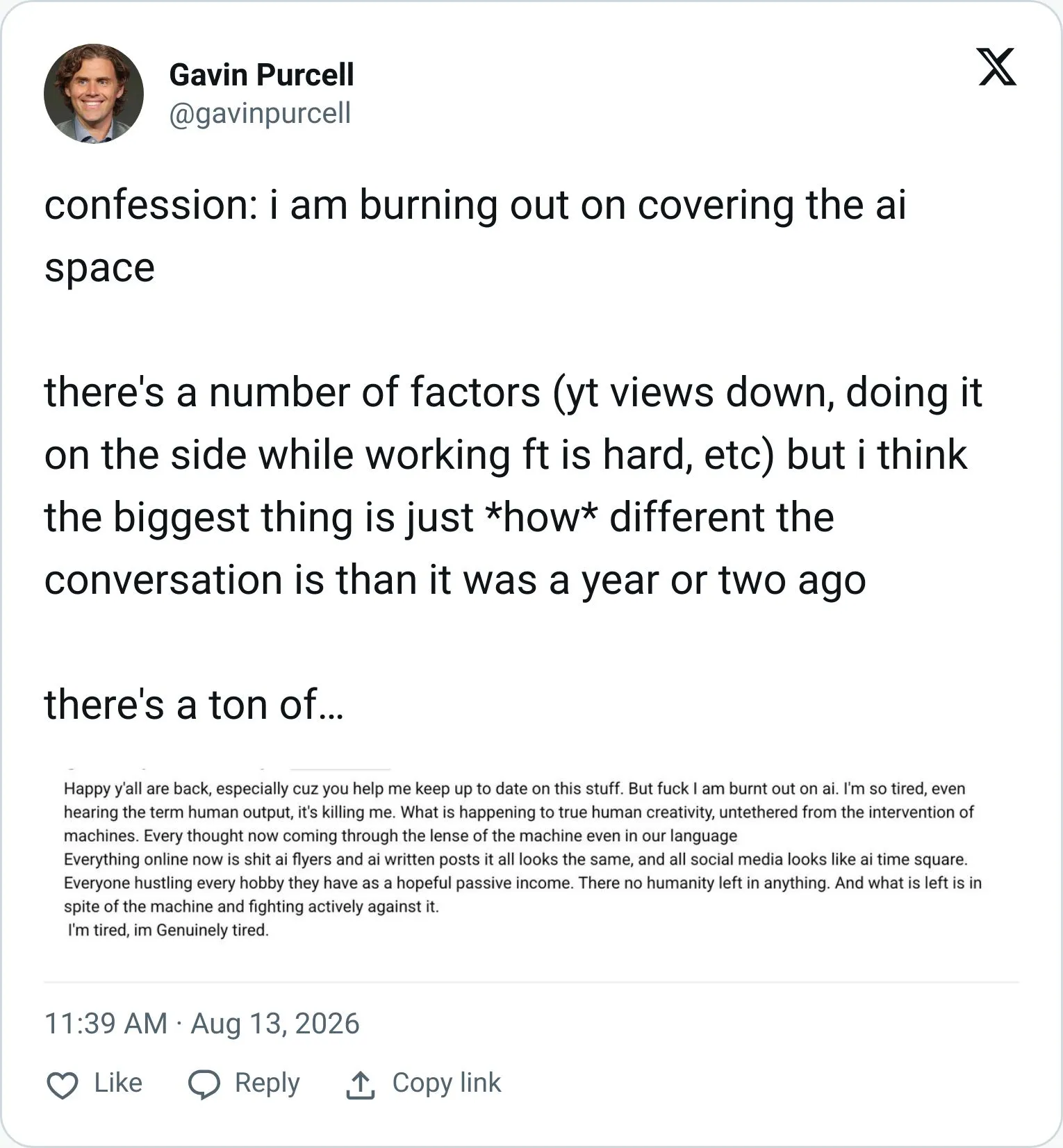
A friend of mine from one of the frontier AI labs reached out after my post above and said he thinks the labs should fund "boots-on-the-ground" style education for how to use AI to get actual value out.
I think that could be a good use of the billions of dollars they've raised but... in our current society, the incentives point toward IPO, not toward making people feel good about all this.
What You Can Do Right Now
My answer is mostly: keep getting better at using the tools. Sigh. Same as it always was.
Even if the next generation of models gets slowed down or held back, what's already out there is deep enough that most of us (me very much included) have only scratched the surface. There is still SO much to learn.
And maybe more importantly, help the people in your life get real value out of these tools. Show a friend how to use AI to untangle a confusing insurance letter or punch up their resume.
People start feeling differently about AI when it actually does something for them, and you can be that bridge for somebody.
3 Things To Know About AI Today
Claude Watermarking Outputs Becomes Huge Controversy
Anthropic announced that Claude's text outputs now carry an invisible watermark: a subtle statistical pattern in word choice (built on Google DeepMind's SynthID tech) that lets a detection tool spot Claude-written text without changing how it reads.
Sounds like not a bad thing to counter AI slop, right?
A chunk of users are pretty upset, mostly folks worried about getting flagged for using AI at work or school, while others point out that the main reason to be mad is if you were passing Claude's writing off as 100% your own.
My take: this prob isn't as big a deal as the discourse suggests. Watermarks wash out with heavy rewrites, nothing is added to the actual text, and Anthropic says it can't be traced to a specific person.
But it does introduce a "scarlet letter" sort of problem if any AI involvement gets flagged. It might even flag this post: I write these words, but I have Claude help me with editing and a few more things.
Where's the line between "AI wrote this" and "AI touched this"? Nobody has a good answer yet.
GLM-5.3 Proves Open Chinese Models Are Coming On Fast
There's been a lot of hand-wringing about open weights models (meaning anyone can download and use them locally, often without guardrails) and this new update from Chinese lab Zai won't make that any better.
The new version of their GLM model looks to have caught up to even Fable 5 on some significant benchmarks.
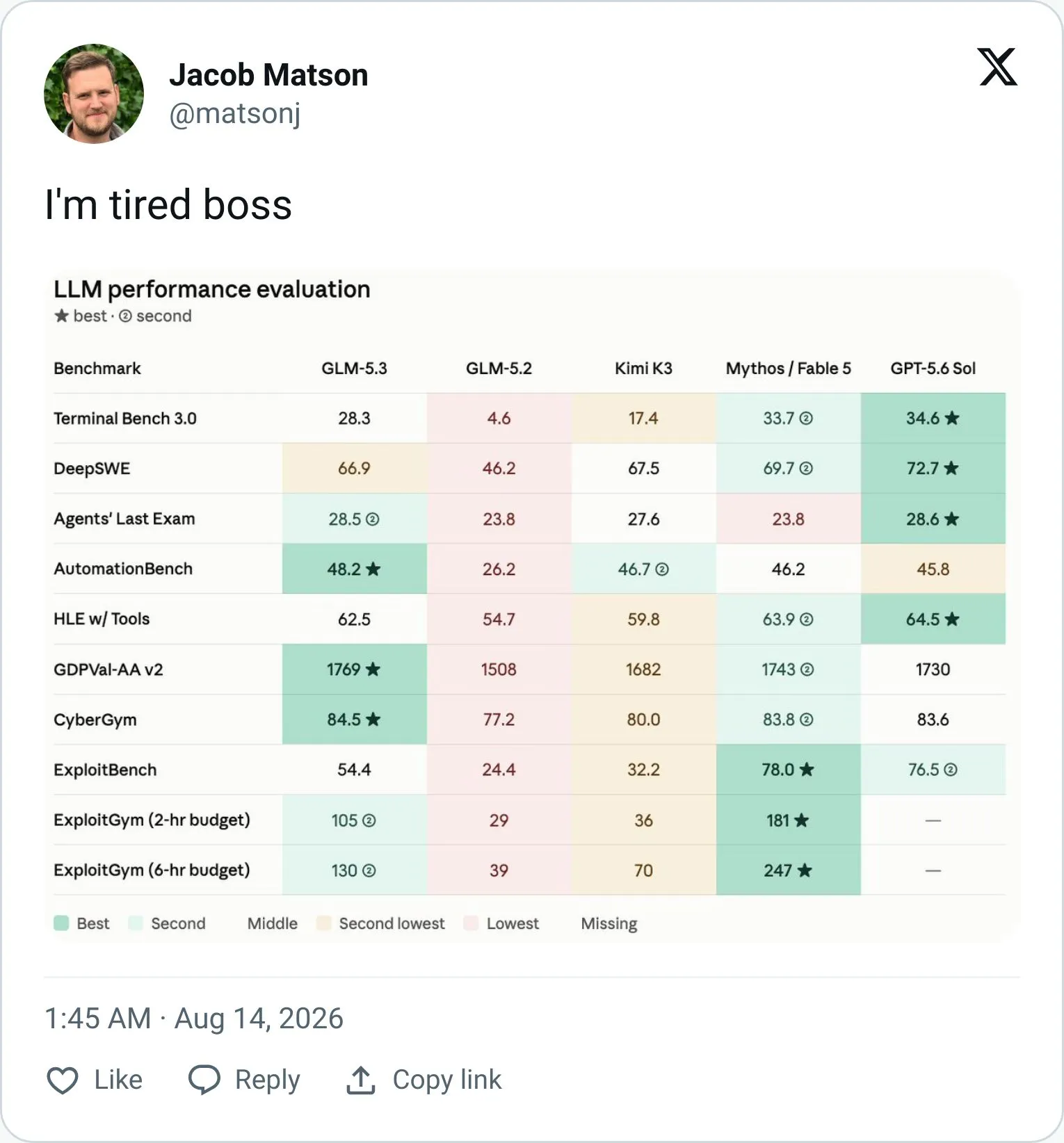
I, for one, am hoping American AI labs keep letting us at least try the next generation of AI models before everyone else, but it's starting to feel more and more like they'll keep the best stuff internal.
In that case, it's also more likely that we'll be using these open weight models more and more. Because if they're essentially equal, they're going to be MUCH cheaper.
Does that matter for the future of AI? I guess time will tell.
Blind Robots Now Doing Skateboarding Tricks
Robotics continues to press forward (kind of under the radar) and if you want a one-clip way to see how far it's come, look no further than this Tony HawkBot (not his real name):
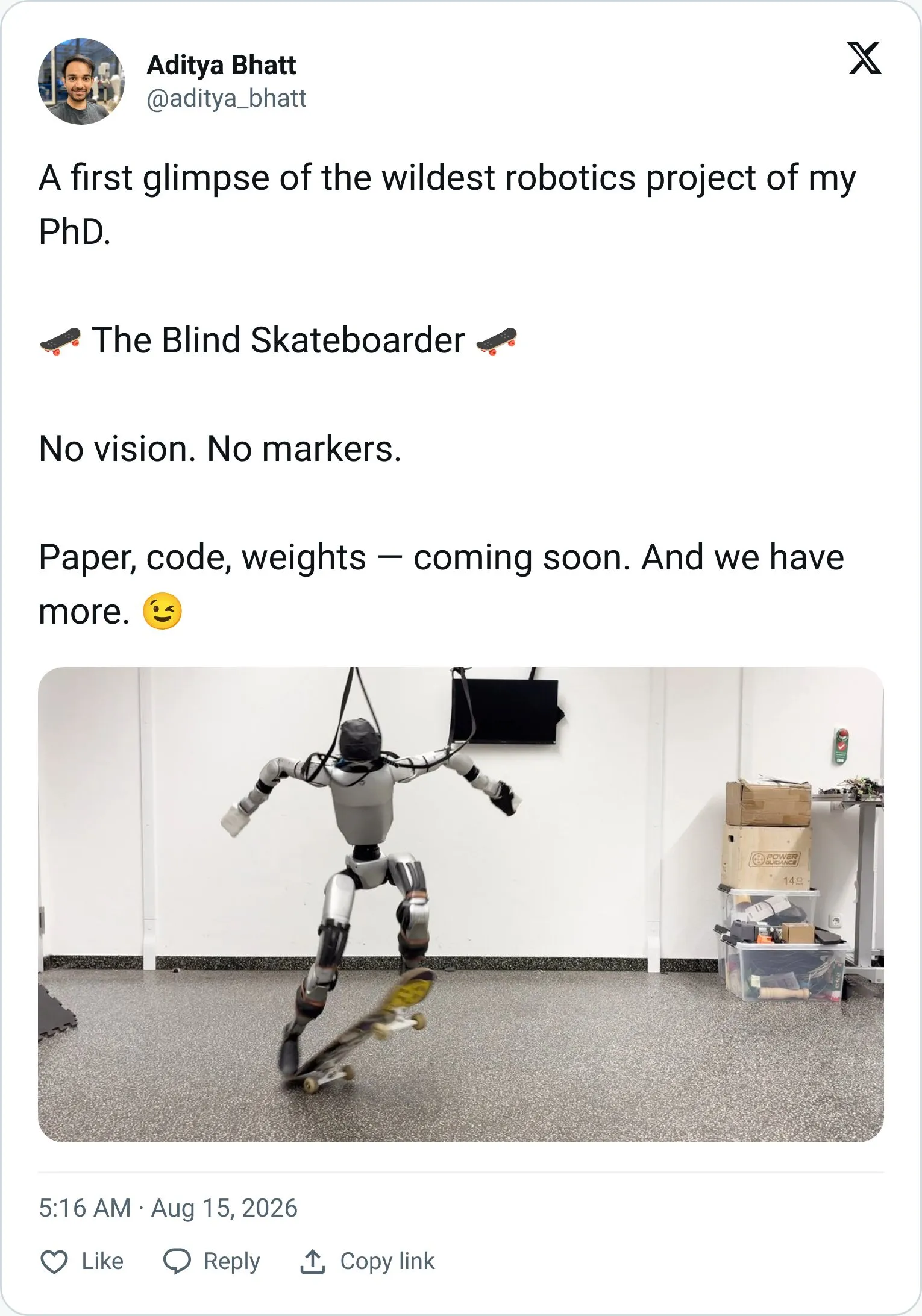
PhD student Aditya Bhatt is working specifically on humanoid dexterity and... uh, it looks like it's going pretty well.
Just don't give that robot a machine gun, ok?
Flux 3 & AI Video Liminal Space
I haven't covered Black Forest Labs' new video model Flux 3 enough (Seedance 2.5 and MiniMax H3 both overshadowed it) but there IS something this model does better than almost any of the others: absolute weirdness.
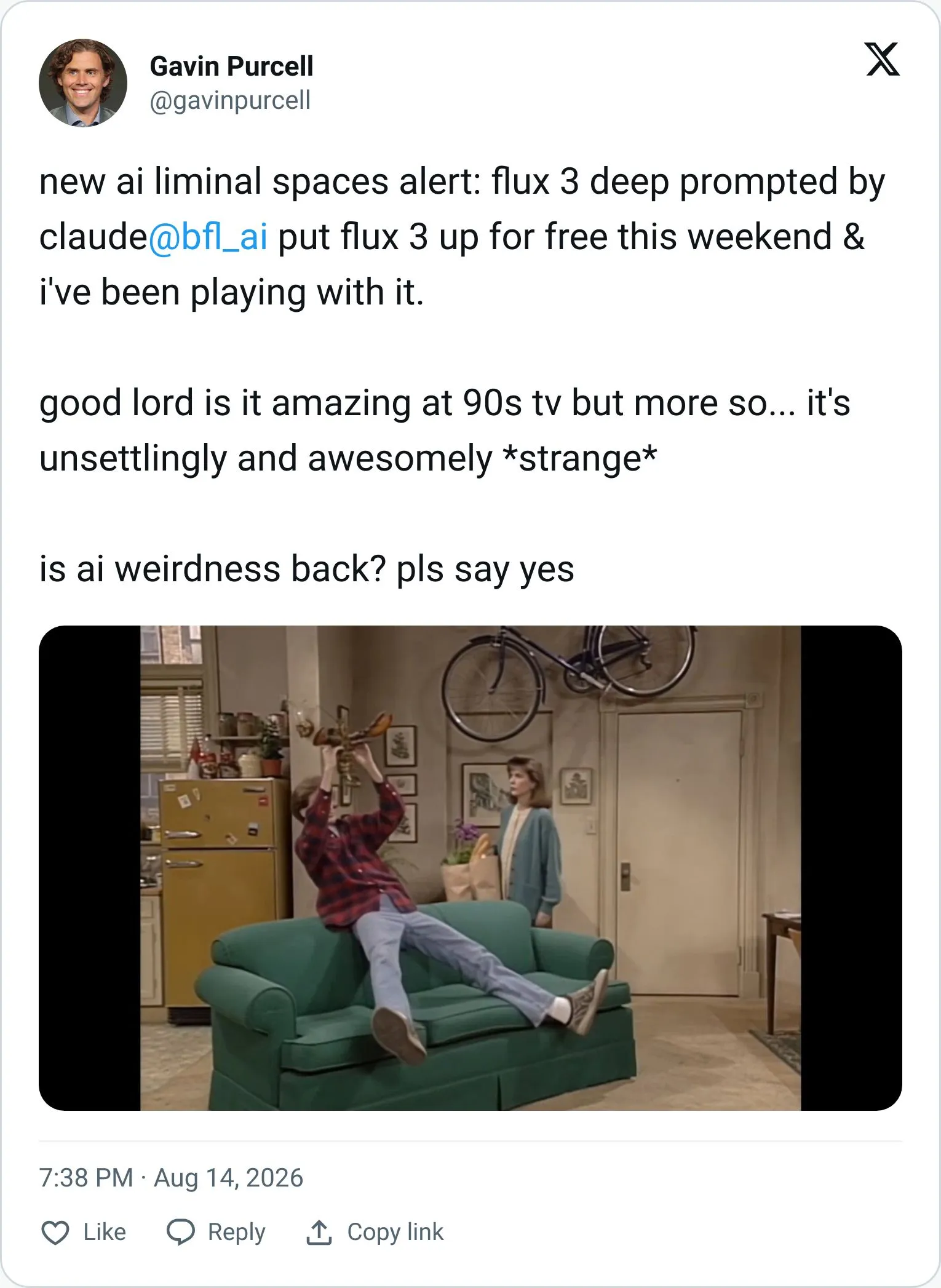
I spent a ton of time over the weekend prompting it into these weird 90s TV clips that have a David Lynch-ian vibe to them, and I got giddy all over again seeing some of the strangeness of AI video come back from the old days.
You can see my prompts here if you wanna try them yourself. Share with me what you make!