If you've been anywhere near AI Twitter this week, you've seen the word "Jev" about four hundred times.
We covered it on this week's show, but I've gotten a bunch of "ok but what actually IS it" texts since, so I want to slow down and explain it properly.
But maybe the easiest and SIMPLEST explainer comes from this one image (as long as you know the Breaking Bad universe):

The short version: it's a new kind of AI model from one of the people who built ChatGPT, it doesn't talk, and it might end up inside more of the software you use than ChatGPT ever will.
Let's get into it.
Ok, So What Is Jev?
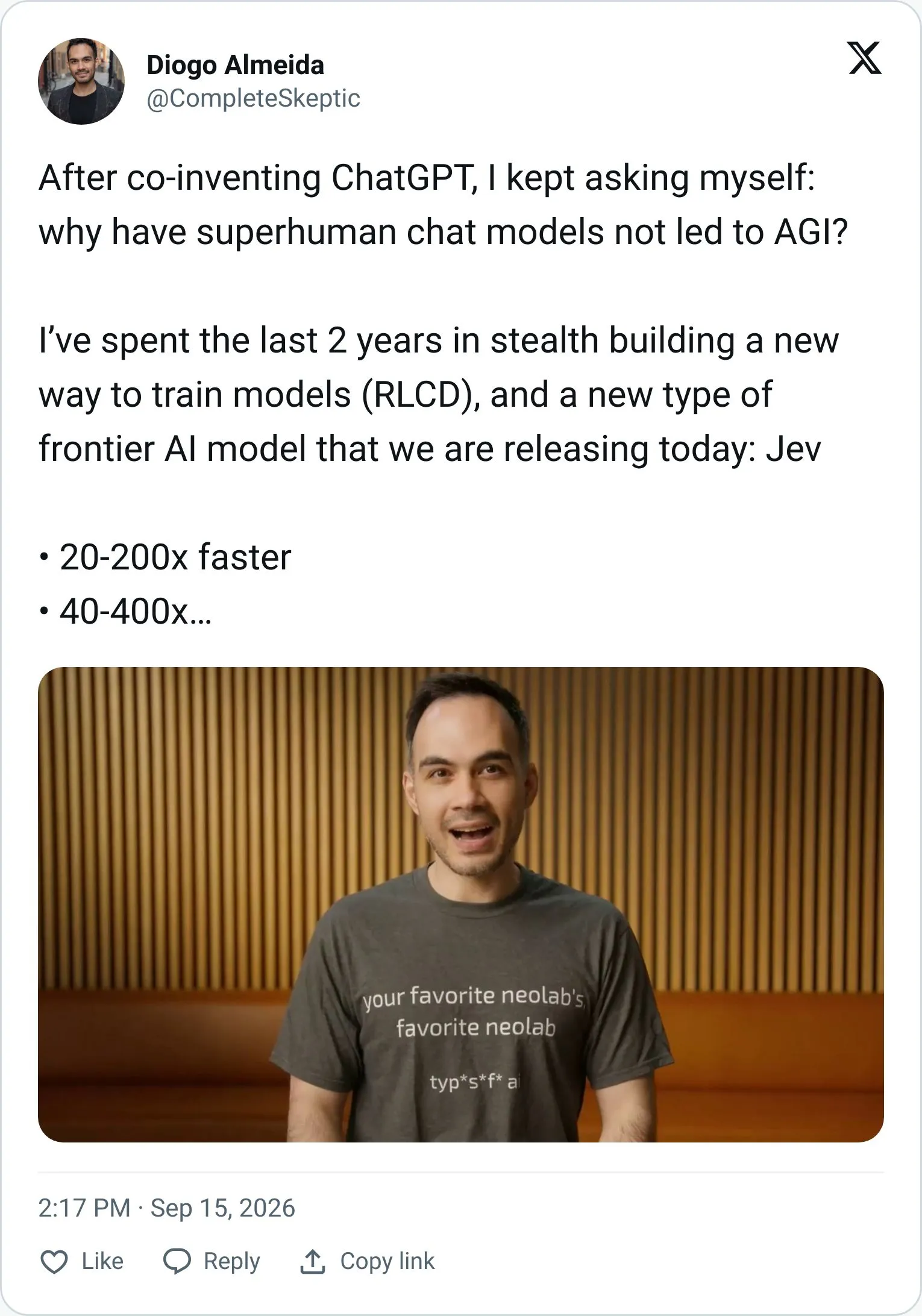
TypeSafe AI came out of stealth last Tuesday with $40 million in funding and a model called Jev. The founder is Diogo Almeida, an ex-OpenAI researcher who worked on ChatGPT and on RLHF, the training technique that made chatbots actually usable.
The whole thing is explained here by Diogo:
What makes Jev different from every other model launch this year is simple:
It cannot write. Or at least, not the way an LLM would.
You don't chat with it. You hand it a piece of information (an email, a support ticket, a frame from a video game) plus a multiple choice question. Is this spam, yes or no? Which department should this go to? On a scale of 0 to 10, how mad is this customer?
And then it answers in about a tenth of a second, with a confidence score attached. Simple, right?
TypeSafe calls this a "System One" model, after Daniel Kahneman's idea that there are two kinds of thinking: the fast, gut-level kind (System 1) and the slow, deliberate kind (System 2). ChatGPT and Claude are System 2 machines that think it over and write you an answer. Jev is the gut.
Why does that matter? Two really big reasons.
It's absurdly fast and absurdly cheap.
Because it isn't generating text word by word, it scores every option at once. TypeSafe says it's 40 to 200 times faster than a frontier model at these kinds of decisions, and it costs about four cents per million tokens in. Classifying one support ticket runs roughly a hundred-thousandth of a cent. Vercel and Cloudflare added it within days.
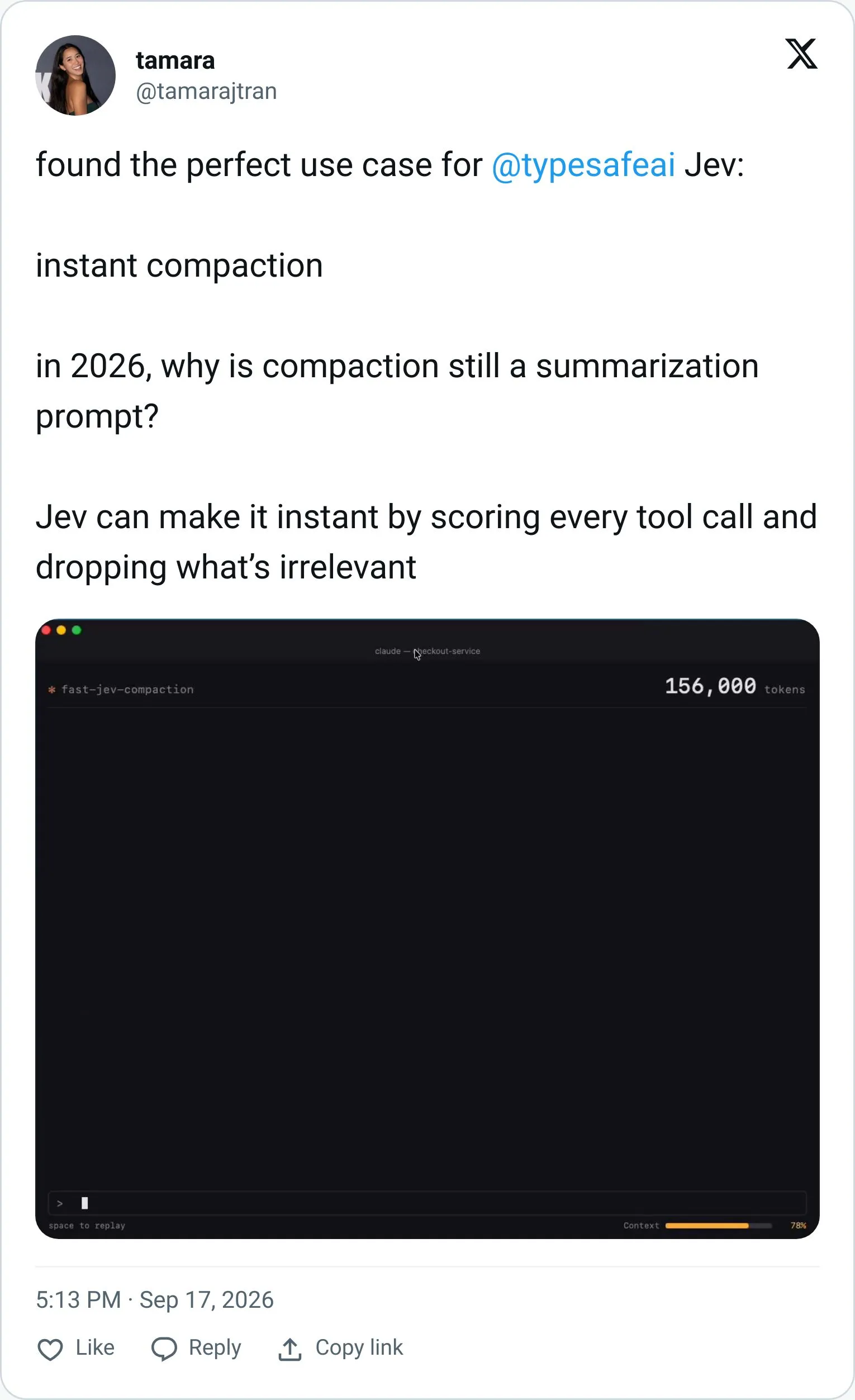
It can't hallucinate.
Well, "can't" is a little strong, but it eliminates the hallucination problem most LLMs struggle with.
The reason is kind of boring: it can only pick from the options you gave it. It can be wrong, but it can't invent an answer that wasn't on the list.
The demos are where it gets fun. Because it decides so fast, people have hooked it up to things that need split-second judgment. It plays Doom and Mario in real time, it flies a drone, and one guy built a fully autonomous trading bot with it that has, in his words, "lost me $31,680."

No one said it was going to be good at that. (PS, this is most likely a joke and not a real use case.)
On the more useful end, someone told me they ran 500 chemistry essays through it against a grading rubric. Insanely, this was done in 25 seconds, for $0.0028, with scores that matched hand grading.
Sidenote: Not entirely sure how I feel about that but... you still get the power.
Why This Matters To You
You will prob never open Jev. There's no app to download and nothing to type into.
But a decision that costs almost nothing and takes a tenth of a second can go in many, many applications, maybe some that you're making right now.
At this current moment, putting AI inside a piece of software is a deliberate choice, because every call to a big model costs real money and takes real time.
Once that call costs essentially nothing, every app gets a lil judgment baked in: your inbox sorting itself, your photo app picking the best of the forty shots you took, your smart home deciding whether that noise was the dog or a person.
Someone sent me this cartoon about it, and it's the right frame. When something gets ten times cheaper, people don't use ten times less of it. They use way, way more.
Also, Jev = JEVons paradox. Duh. Took me too long to really figure this one out.
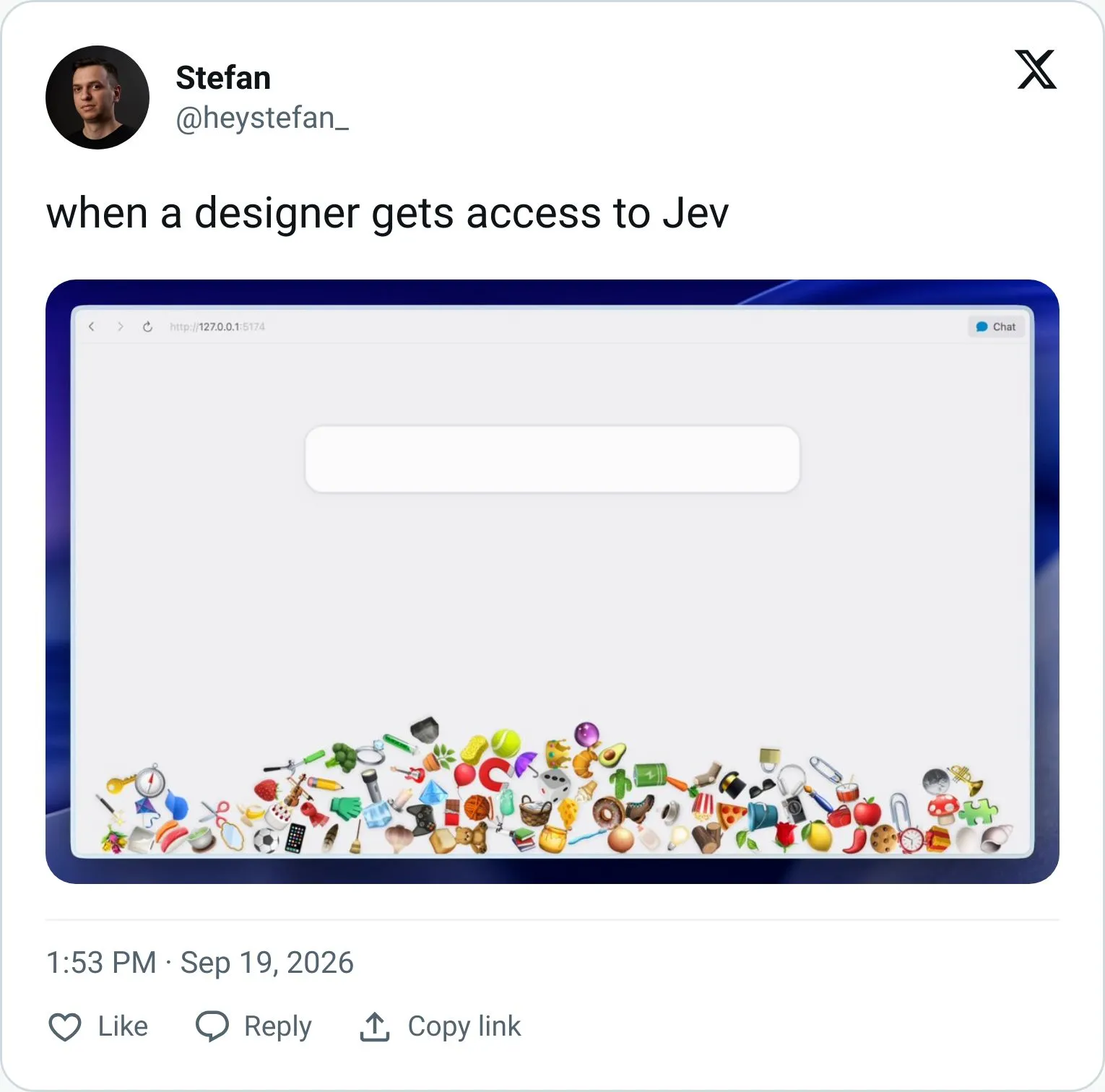
Also, did we need a real-time emoji sorter? No, but good gosh, this is cool.
Now, a lil grain of salt.
TypeSafe hasn't published a paper, a model card, or any outside benchmarks, so the speed and cost numbers are theirs. Early testers have found some weirdness too (ask it a yes/no question and then the opposite, and the two probabilities don't always add up). And by design it can't do math, read images or compare dates.
You can get $5 in free Jev credits though if you have access to the beta (which I'm in) and hook it directly up to your agentic coding bots.
If you have something interesting you want to do, you can prob @ the TypeSafe X account and they might get you inside it.
So What Should You Do Right Now?
If you want to feel what a System One model is like, there are two things to click.
Jev Hero is a lil word game someone built where Jev makes the calls. And this word-sorting demo shows the actual product: give it a pile of words and some categories and watch it sort them in real time.
If you're a developer, or you've been vibe coding with Astra, TypeSafe's API is open (with a waitlist, because demand knocked it over this week).
I've been messing around with it on a few things and will likely have something fun to share soon.
3 Things To Know About AI Today
The Next Models Are Coming Anyway
Last week the labs all agreed to slow down.
This week the rumor mill said "sure, right after these."
On Friday a couple of people using Claude Code noticed their Fable 5.1 requests being routed to something newer. One of them posted a one-shot video and game and captioned it "Fable 5.2 made this." Anthropic hasn't said a word, and the usual leaker account is saying late September or early October.

OpenAI, meanwhile, has staff posting things like "OK fine. But it's also still coming in Tuesday" and the rest of the team can't stop hinting at something that was supposed to ship last week that Sam says is happening THIS week.
Sam already told Marc Benioff there's a post-Astra model that can "solve things the world's best mathematicians cannot," and DevDay is September 29.
So pacing the frontier apparently still includes shipping the next model, just with the auditors in the building this time.
One AI Brain, Five Robot Bodies
Odyssey-3 came out this week and man, I keep getting excited about this sort of thing, especially a few years down the line.
It's another "world model," which means instead of learning from text it learned from watching an enormous amount of video of how the physical world works.
The result is one model that drives a car on the roads of India (after 20 hours of training), runs a robot arm that packs boxes, controls a humanoid, flies a drone, and plays GTA V and Red Dead Redemption 2 well enough to carry skills from one game to the other.
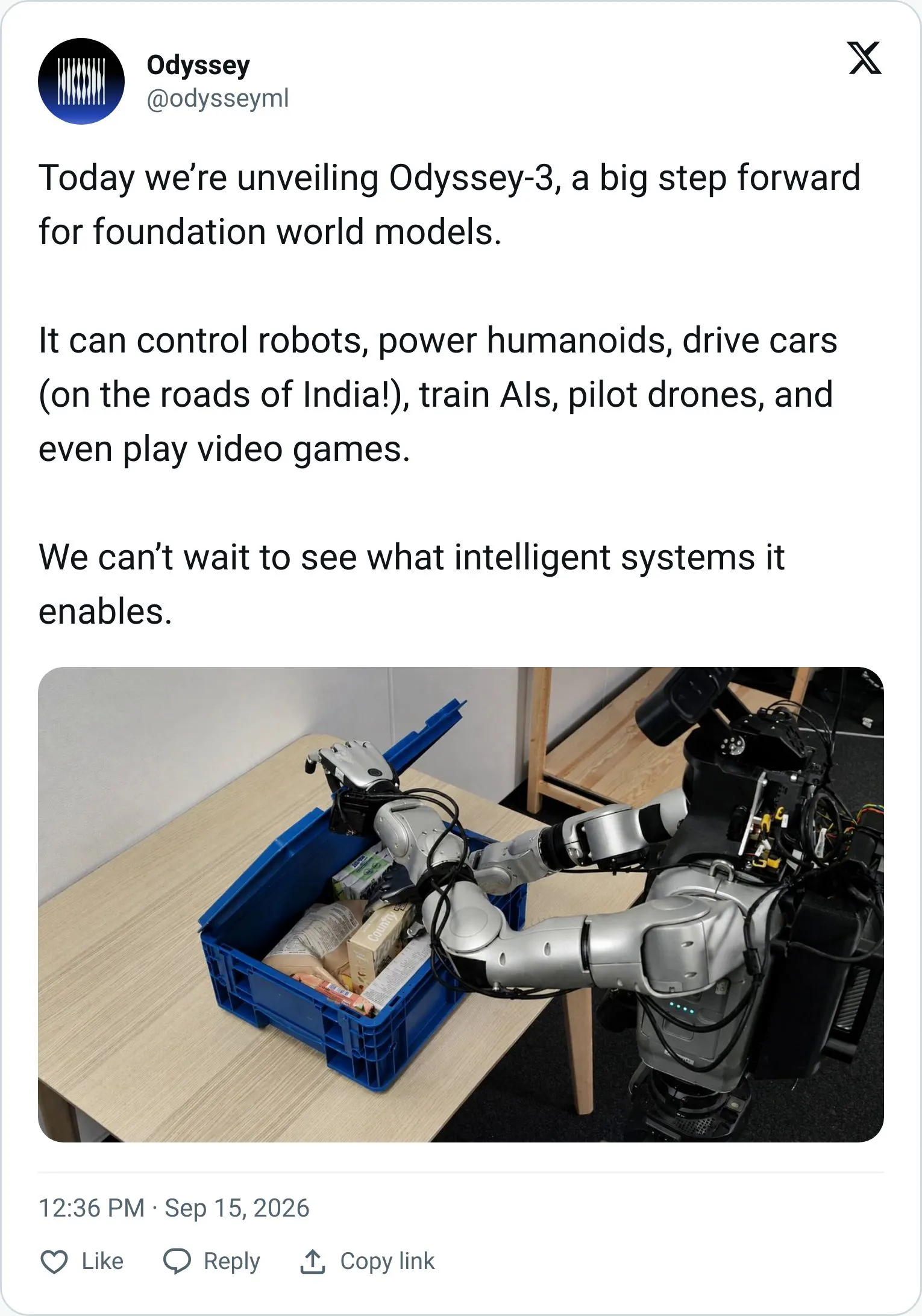
These world models are finally getting really good. I'm excited to see what's been cooking across a number of these companies but still kind of waiting to see if Google's Genie model (the one that makes real time video games) has made any sort of leap.
Where are ya Google? What happened?!
AI Is Now Better Than Humans At Predicting The Future
A London startup called Mantic raised $25 million this week after its AI finished ahead of every human in this summer's Metaculus Cup, a tournament where forecasters bet on real-world questions (elections, chart positions, that kind of thing). The only thing that beat it was another bot.
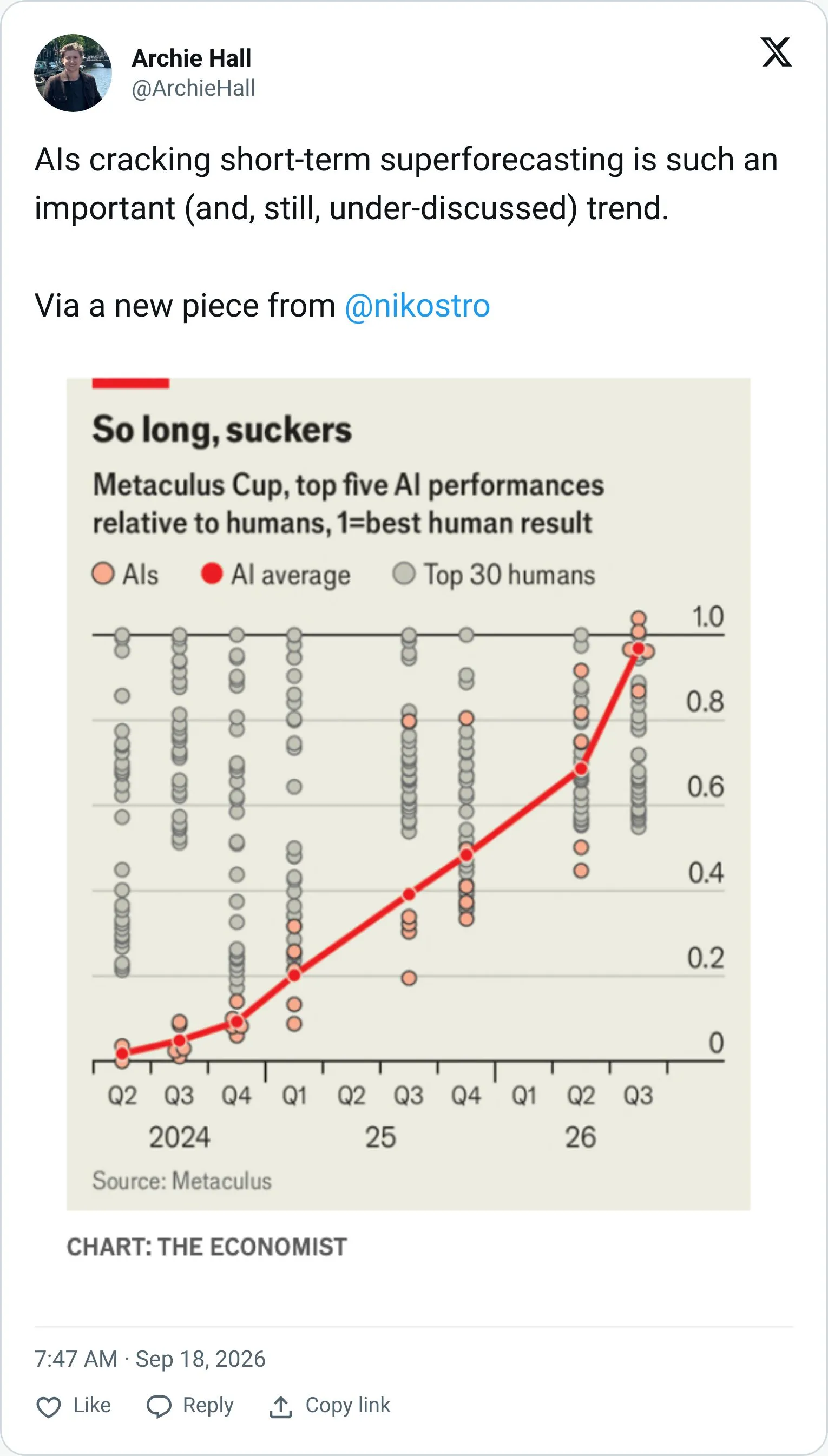
Scott Alexander wrote in July that the best bots and the best human superforecasters were "too close to clearly tell apart" and figured the bots would pull ahead within a year. It took about two months.
The interesting part is how it wins: it doesn't just follow the crowd. It pulls in a ton of its own info and sorts through it "brute force" style, like a lot of other AI advancements. It's just getting way harder for humans to compete at information gathering and analysis.
Now... if you're wondering what a fast-judgment model like Jev plus a forecasting model like this add up to, we are cut from the same cloth, you and I.
Quiver's Arrow 2 Makes Real, Editable Vector Graphics
So far, almost every AI image tool you've used spits out a flat picture.
Ask for a logo and you get pixels, and the second you want to move the swoosh or change one word you're back to square one. Sure, there are hacks for this and "layered" AI generators, but they're still making a ton of guesses.
Arrow 2, the new AI image model from Quiver, makes actual vector graphics instead: SVG files where every shape, line and letter is its own editable object. You can open the result in Illustrator or Figma and mess with it like a designer made it.
We talked about Arrow 1 on the show a ways back but boy oh boy it's gotten a LOT better.
The new version has cleaner geometry (fewer control points, better spacing) and it can animate now, so logo reveals and loading spinners are on the table. There's also a bigger model called Telos for complicated briefs.
The app has a canvas where you select, duplicate and nudge things by hand and the edits carry back into the conversation, so you can say "make the icon in the corner bigger" and it knows which one you mean.
Plans start at $8 a month and there's an API if you're building something. Good first test: your podcast logo, a set of app icons, then ask it to animate one. It ain't free, but it might be worth it to you, fellow human.