ICYMI, China's Moonshot AI released Kimi K3 last week and it's kind of all anyone in the AI world can talk about.
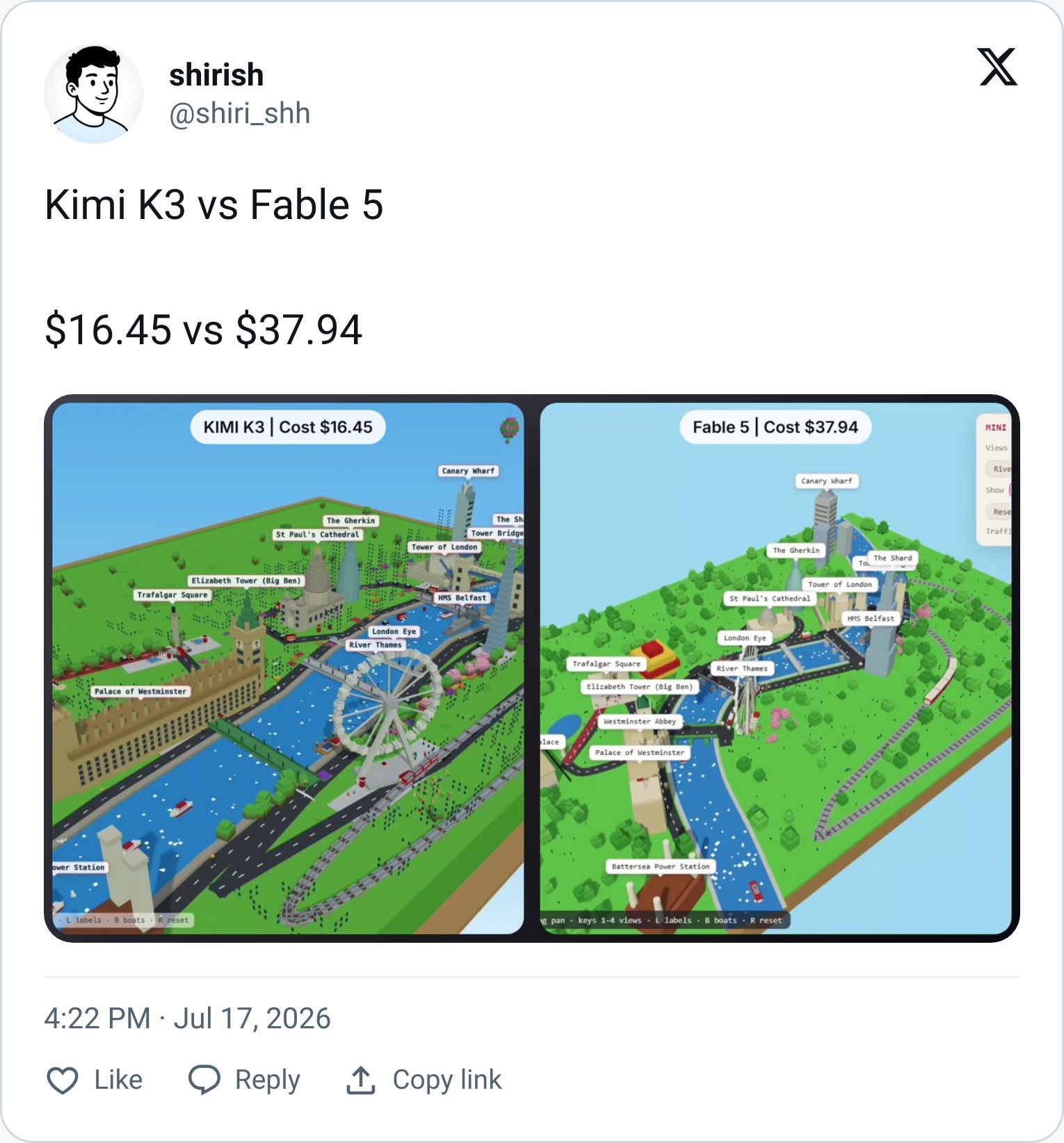
The reason? It's really, really good. Independent testers have it just a few points behind Claude Fable 5 and GPT-5.6 Sol, it just became the first open model to take the #1 spot on Arena's front-end coding leaderboard, and it costs about the same as Claude Sonnet 5.
Below: how to actually use this thing, why Chinese AI matters more than ever, and a fun Opus 5 scoop-let from Kevin.
How To Use Kimi K3 (For Humans)
First, the easy way: go to kimi.com or download the app, sign up for free, and start chatting.
It works a lot like ChatGPT or Claude, complete with reasoning mode.
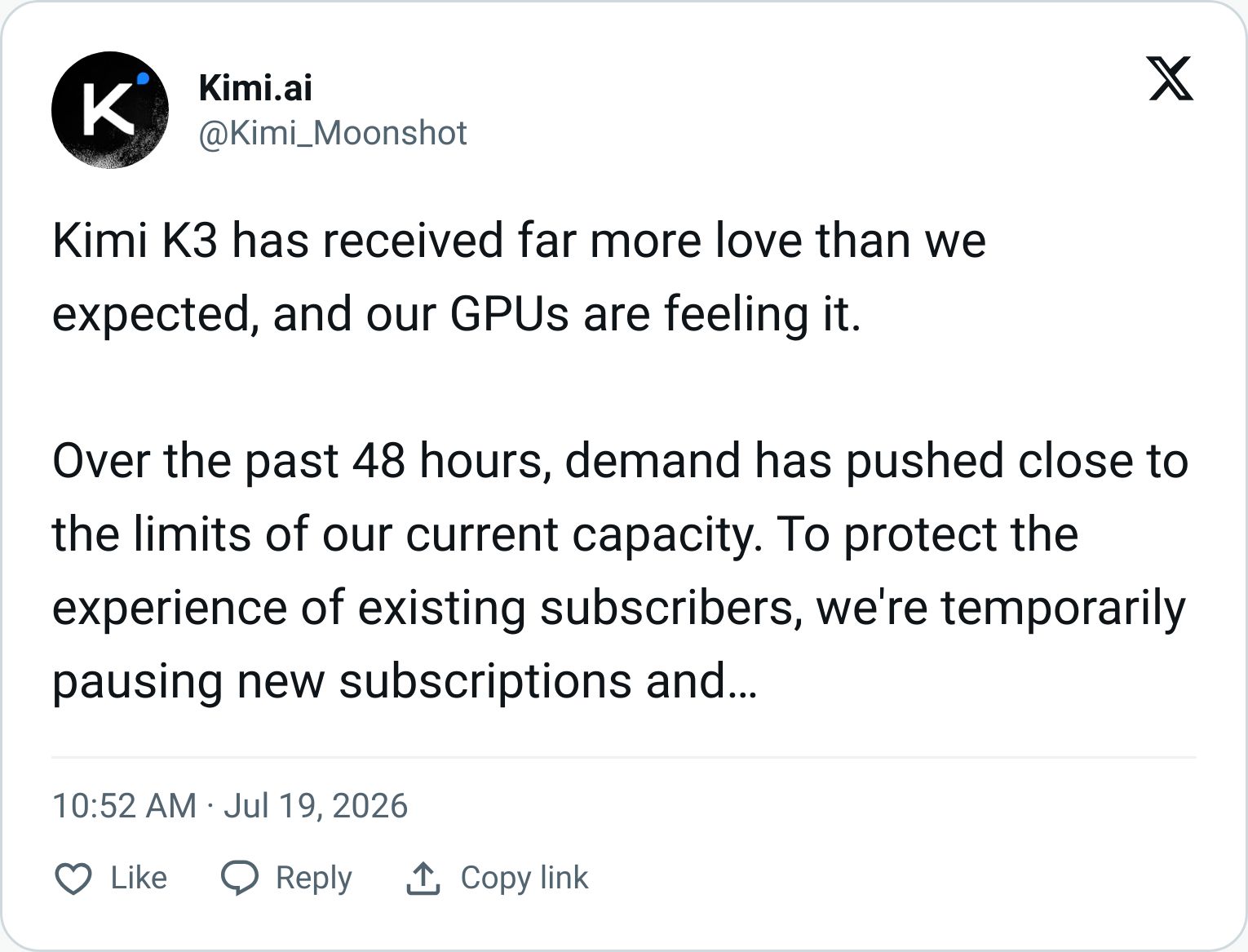
Fair warning: everyone on Earth is trying it right now, and Moonshot's servers have been, in their own words, melting. Be patient.
Now, the slightly nerdier way: the API.
Kimi's API works with basically any AI tool that lets you plug in an OpenAI-style model. You get a key at platform.kimi.ai, point your app at api.moonshot.ai/v1, and type in "kimi-k3".
Why bother? Money, mostly. K3 costs $3 per million input tokens and $15 per million output, which is exactly what Anthropic charges for Sonnet 5, except Kimi can hang with Fable 5 on a bunch of benchmarks.
This might not matter to you if you're just a subscription user of Anthropic or OpenAI, but if you're building anything that relies on intelligence and an API, it's a great, cheaper option.
One analysis put it at about half the per-task cost of Opus 4.8. (Don't want to give a Chinese company your credit card? It's on OpenRouter too.)
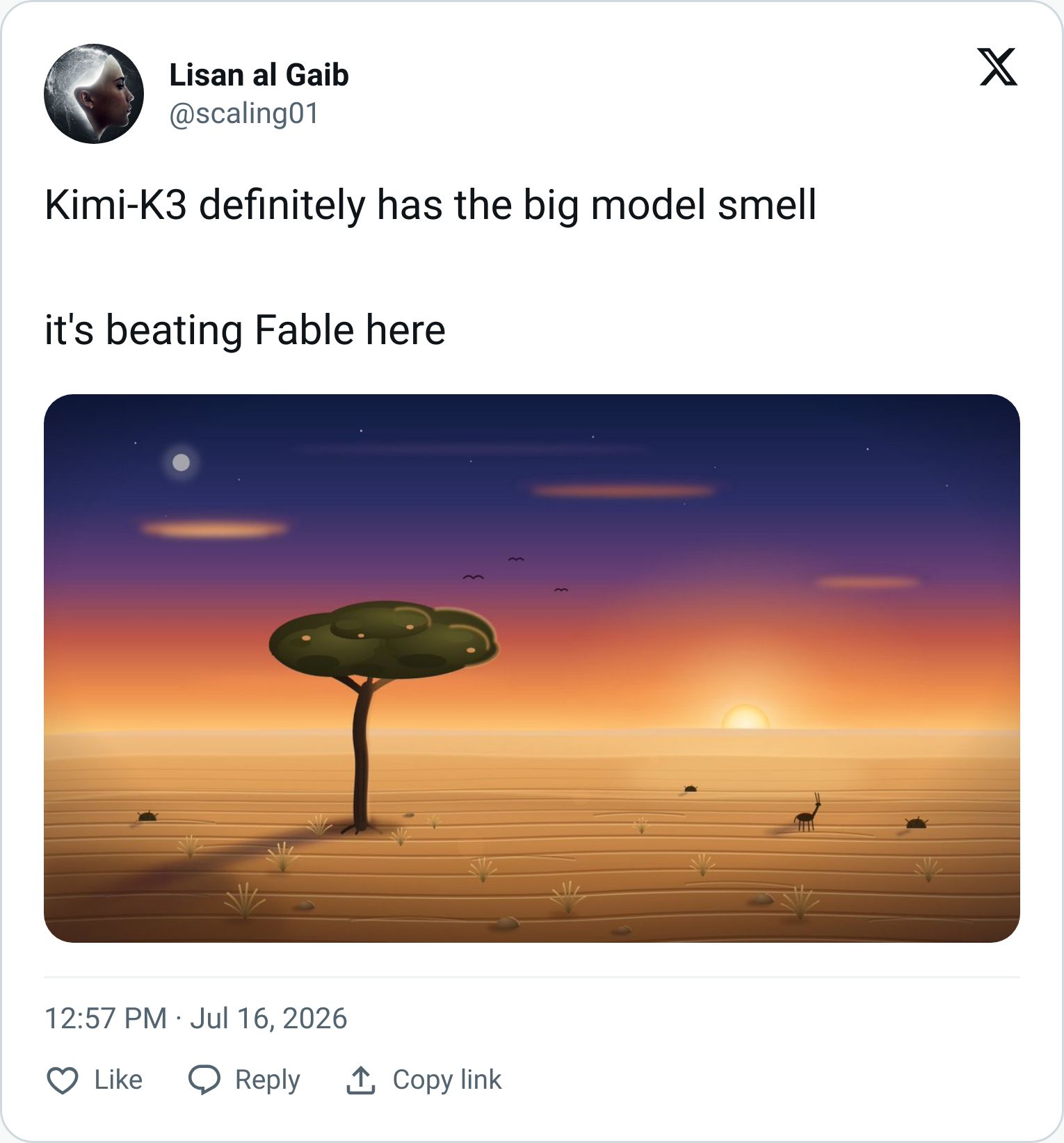
It's also WAY less locked down than the American models, and it is remarkably good at front-end coding.
And on July 27th, Moonshot will release the full weights under a modified MIT license. You won't be running a 2.8 trillion parameter model on your MacBook, but companies (and entire countries) will run it on theirs.
One honest caveat: it hallucinates more than the last version (its rate jumped from 39% to 51% in one test) and it can get a little overeager when working on its own. I'd keep the important stuff with Claude or GPT for now.
But for creative work and coding? It's worth trying. I certainly am going to.
Why Chinese AI Matters
So why is everyone SO worked up about this?
For two years, the story has been that Chinese AI is cheap but a step behind America.
Kimi K3 pretty much ends that story, and in ten days, anyone in the world will be able to download it. Again, you probably won't because it's too big, but other people can serve it to you without China being involved or controlling it.
Cue the freakout.
David Sacks, Trump's former AI czar (and a guy with a very specific political agenda), posted this:
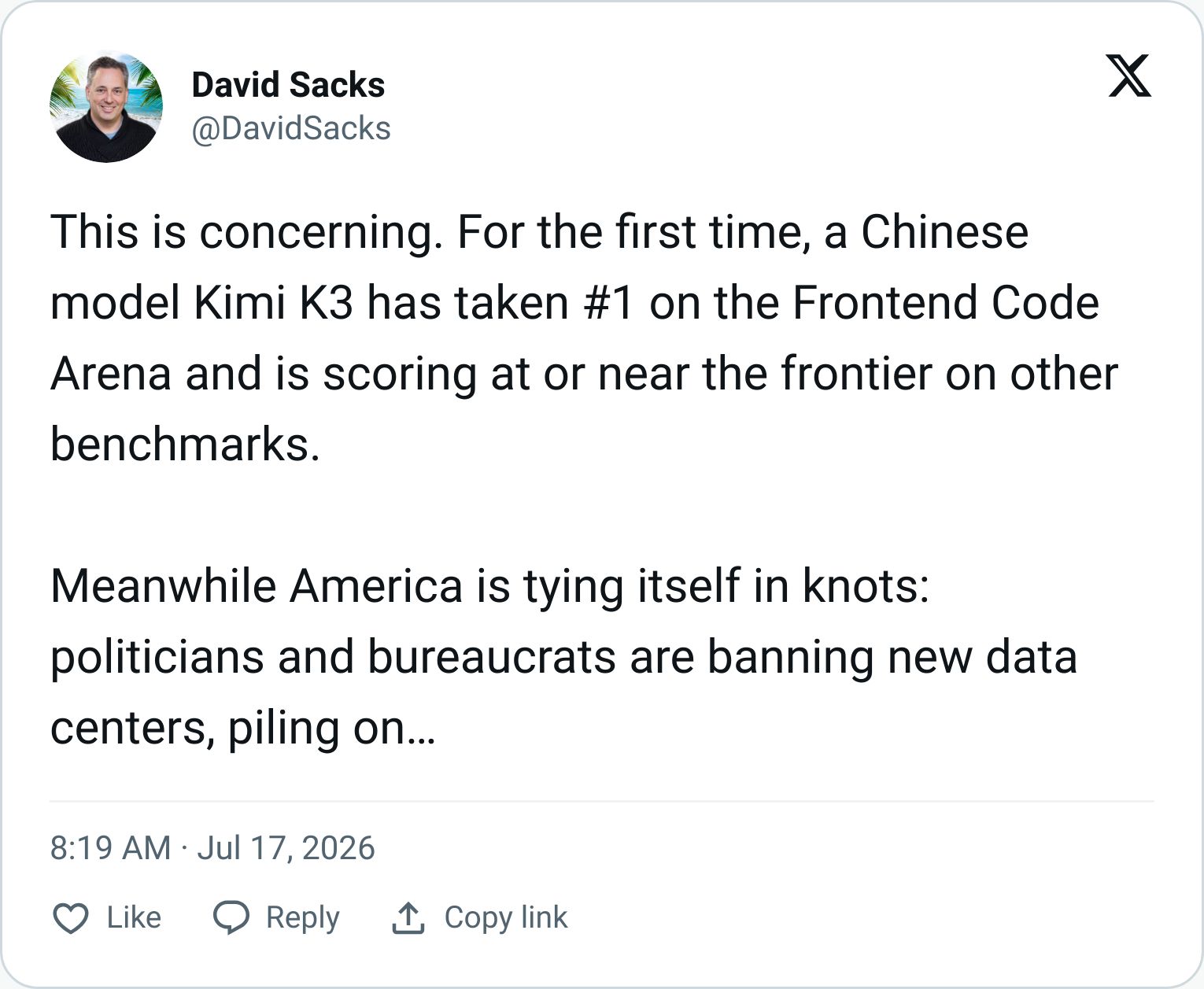
You don't have to agree with Sacks' politics to see the actual issue: if the best free AI in the world comes from China, a whole lot of the world will build their apps, their companies, and yes, their governments on top of Chinese AI.
That's a big deal. And China knows it's a big deal, which is why Xi Jinping gave a whole speech about open source AI last week.
Things Moving Ever Faster
People love to say AI is slowing down. And then, in a single week: a 2.8-trillion-parameter open model from a lab most Americans had never heard of, a rumored Opus 5 that might beat Fable 5, and louder-than-ever GPT-6 whispers.
It sure doesn't feel like a slowdown from where we're sitting.
3 Things To Know About AI Today
China's President's AI Speech Shows The Stark Divide Between AI Superpowers
Late last week, China's President Xi Jinping gave the keynote address at China's World Artificial Intelligence Conference and advocated directly for open source AI tech.
I know this might feel slightly wonky, but I encourage everyone to watch it (with subtitles on) to get a sense of the different stances of America vs China as we head into a tumultuous few years.
The Kimi K3 launch has led to a LOT of discussion amongst AI people around how China is coming for our lunch and what we might be able to do about it. This particular post from Dean Ball (former Trump AI official, now OpenAI employee) got a lot of people riled up by saying that open source AI is "decelerationist."
Opus 5 Better Than Fable 5, And SOON?
In a rare AI For Humans scoop-let, Kevin mentioned on this week's show that he's been chatting with someone with early access to Claude Opus 5, and it's actually better than Fable 5, just a bit slower.
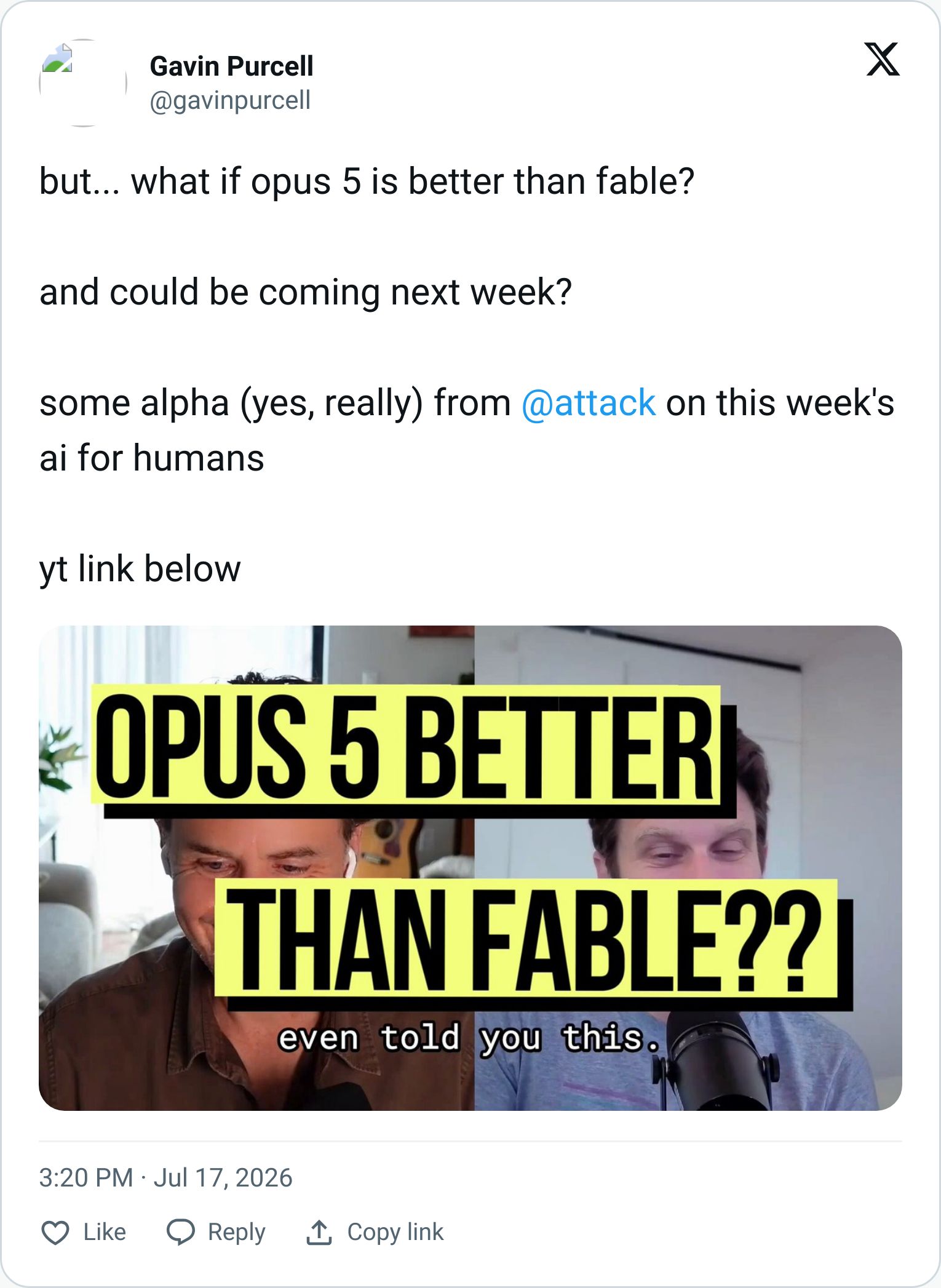
This would definitely solve users' worries about Fable 5 going away in the subscription plan which, in case you missed it, has been extended. Thank you, competition.
Free House Cleaning = Robot Training
Have you heard of Shift? You might've seen their videos online where they say they'll send a few people to your house with cameras to do work for you FOR FREE. They've just introduced cooking helpers.
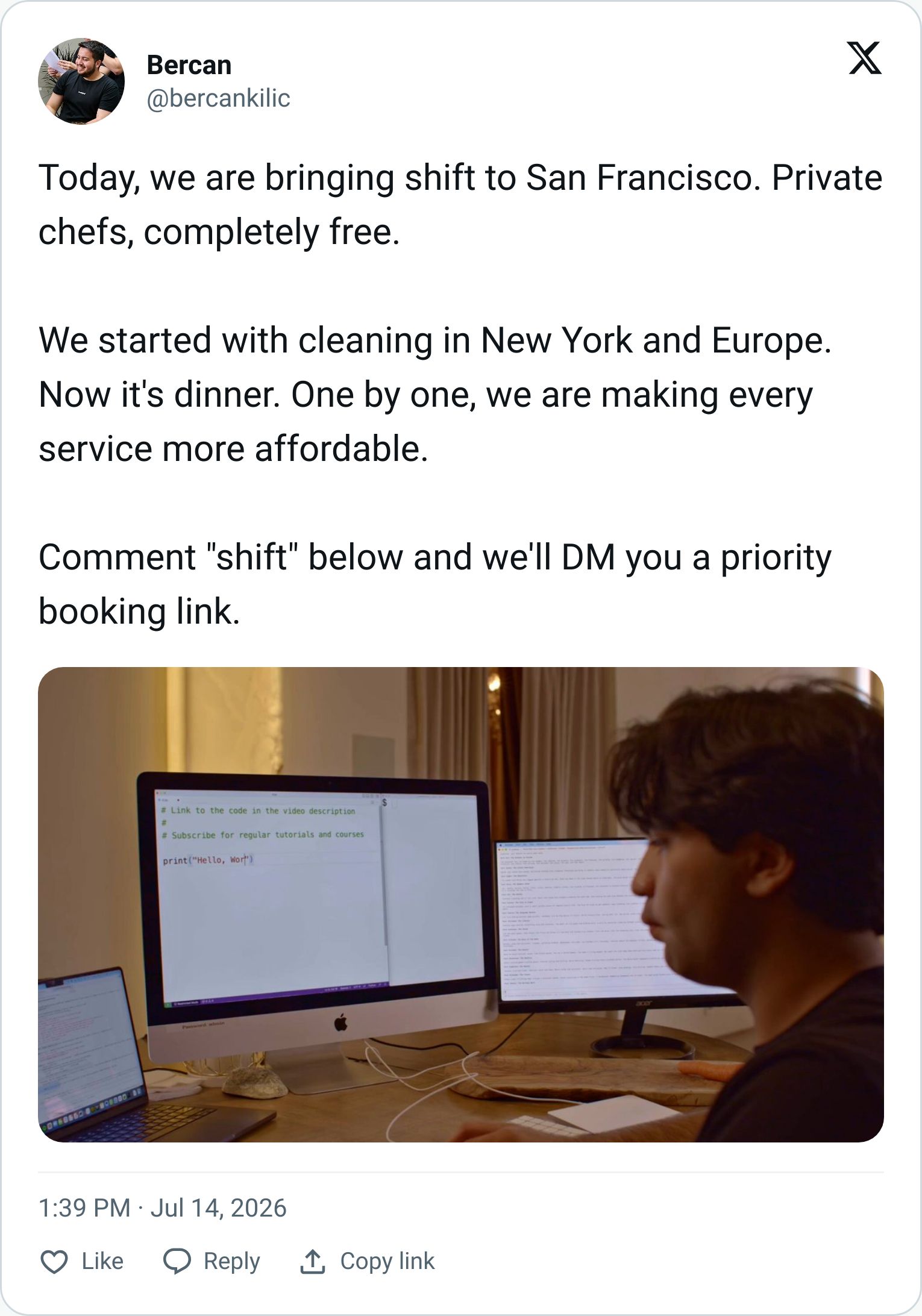
But free is never really free, right? In this case, you're paying with data: those cameras are recording every scrubbed pan and folded towel to help train the humanoid robots that are coming (fast).
The WSJ's Joanna Stern dove into the company to figure out what it actually means to have humans training robots in your house, and she sat down with Shift's CEO to ask where all that footage really goes.
Kevin's CURSED Paint-n-Hide Game
It's not just me making stuff all the time. Kevin too is out here in the AI streets, whipping up new things, and his new game CURSED is a really cool, fully vibe-coded game you can try right now.
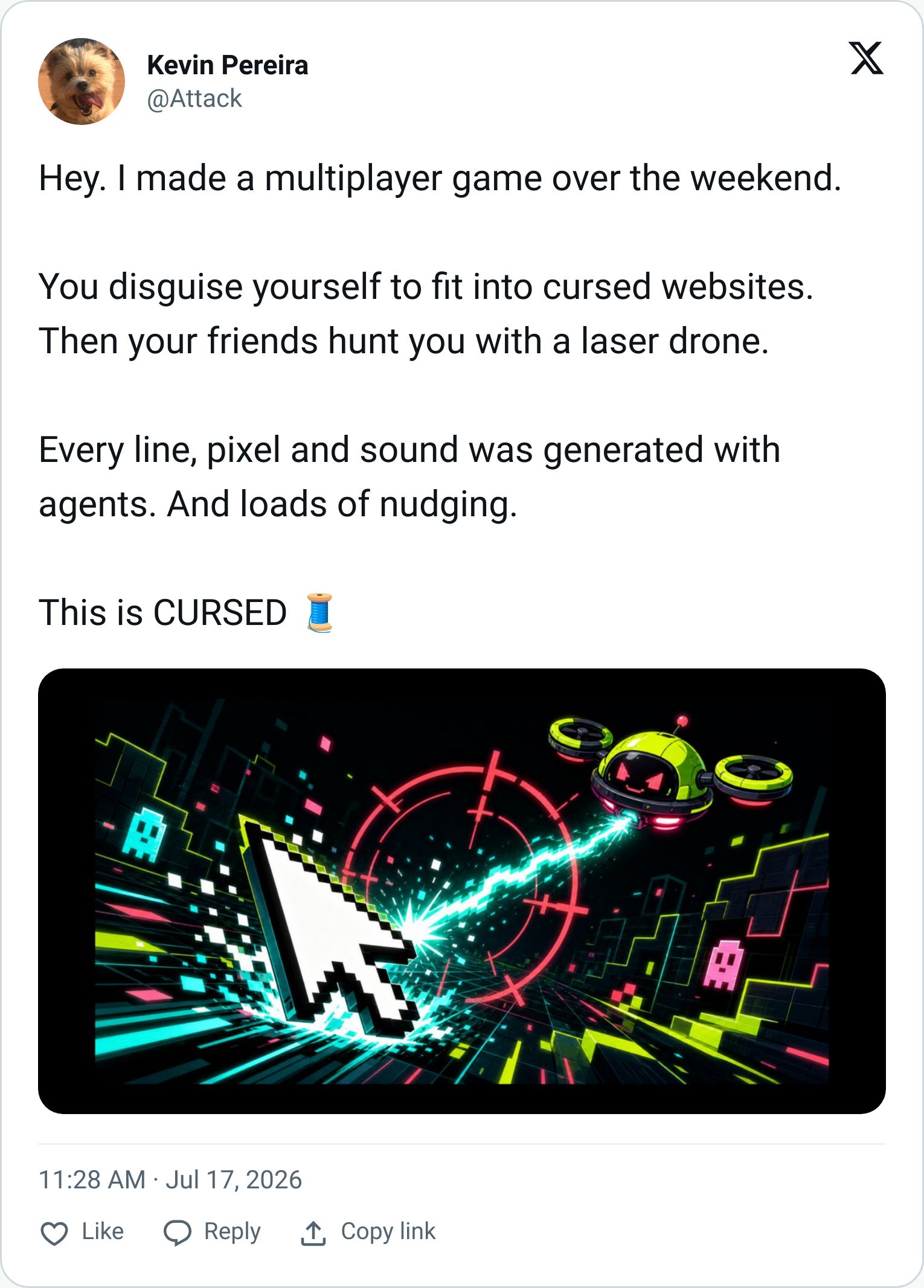
CURSED is a take on the popular multiplayer PC game Meccha Chameleon where you attempt to hide from seekers by painting your character like Peeta from The Hunger Games.