A three-step guide to thriving as a creative human being at the dawn of AGI.
Last week, the AI powers that be (minus OpenAI's Sam Altman) pontificated at the Davos Conference about how AI is going to massively disrupt jobs. Anthropic's Dario Amodei even predicted that in 2-3 years, AI will be able to do the work of most software engineers.
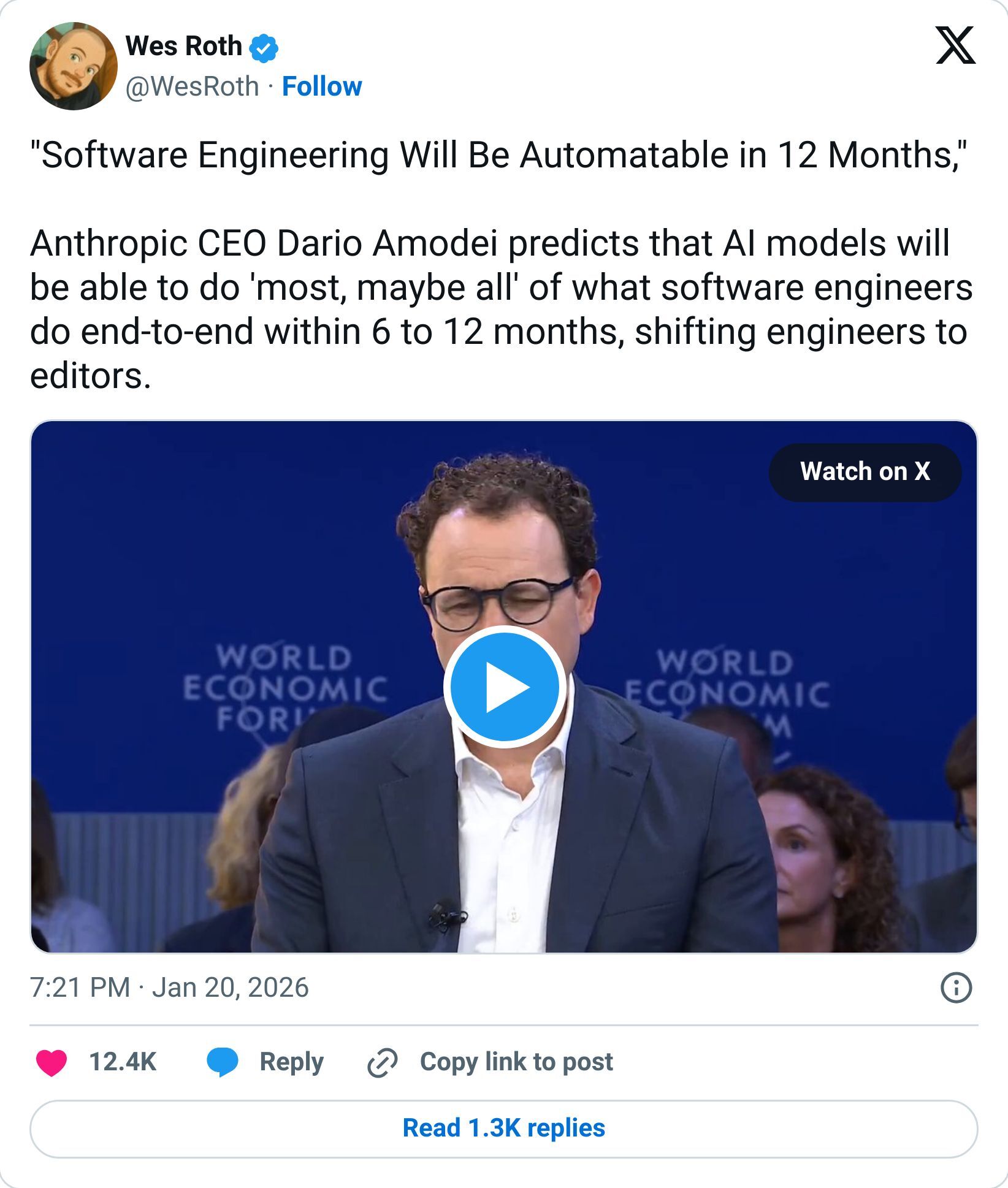
This is being echoed inside the AI Labs (even our favorite AI tweeter Roon says he doesn't write his own code anymore) and outside in the prosumer world via the influx of new Claude Code users…see Hard Fork this week and our episode below.
You might be asking…
I'm not a coder, I'm an <insert your job here>. So what exactly does AI being able to code have to do with me? I'm just trying to make a living <insert pain point in your job here> and it continues to be a struggle.
I want y'all to listen very closely here:
AI coding being 'solved' is the canary in the coal mine when it comes to a lot of everyday jobs being done by these systems.
In stark terms, this means that in the next five years (give or take)… AI will be able to do what you do.
So now what?
This is the time to start thinking about the sort of life you want to lead going forward. Like, today. Because things are changing fast.

No, I'm not talking here about the AI bro cliche of 'the permanent underclass'. This meme is predicated on the idea that once we hit AGI (and beyond to Super Intelligence) all the money will flow upward and there won't be any jobs for anyone. The New Yorker has a good piece on this.
On the contrary, I suspect there will be lots of successful companies and individuals over the next five, ten, twenty years who are able to best work with these tools as they change and improve.
But these people will not be the types who happily clock in-and-out of a 'normal' job, sticking money in their 401k and livin' for the weekend.
Here are three practical tips for how to start changing your approach now…
Ideas, Ideas, Ideas (More Shots on Goal)
The Big Idea: When execution gets cheap, imagination becomes the only thing that matters.
We've spent decades being told to focus. Pick one idea. Polish it. Make it perfect before you ship.
That made sense when execution was expensive…when building something meant hiring developers, buying equipment, spending months on production.
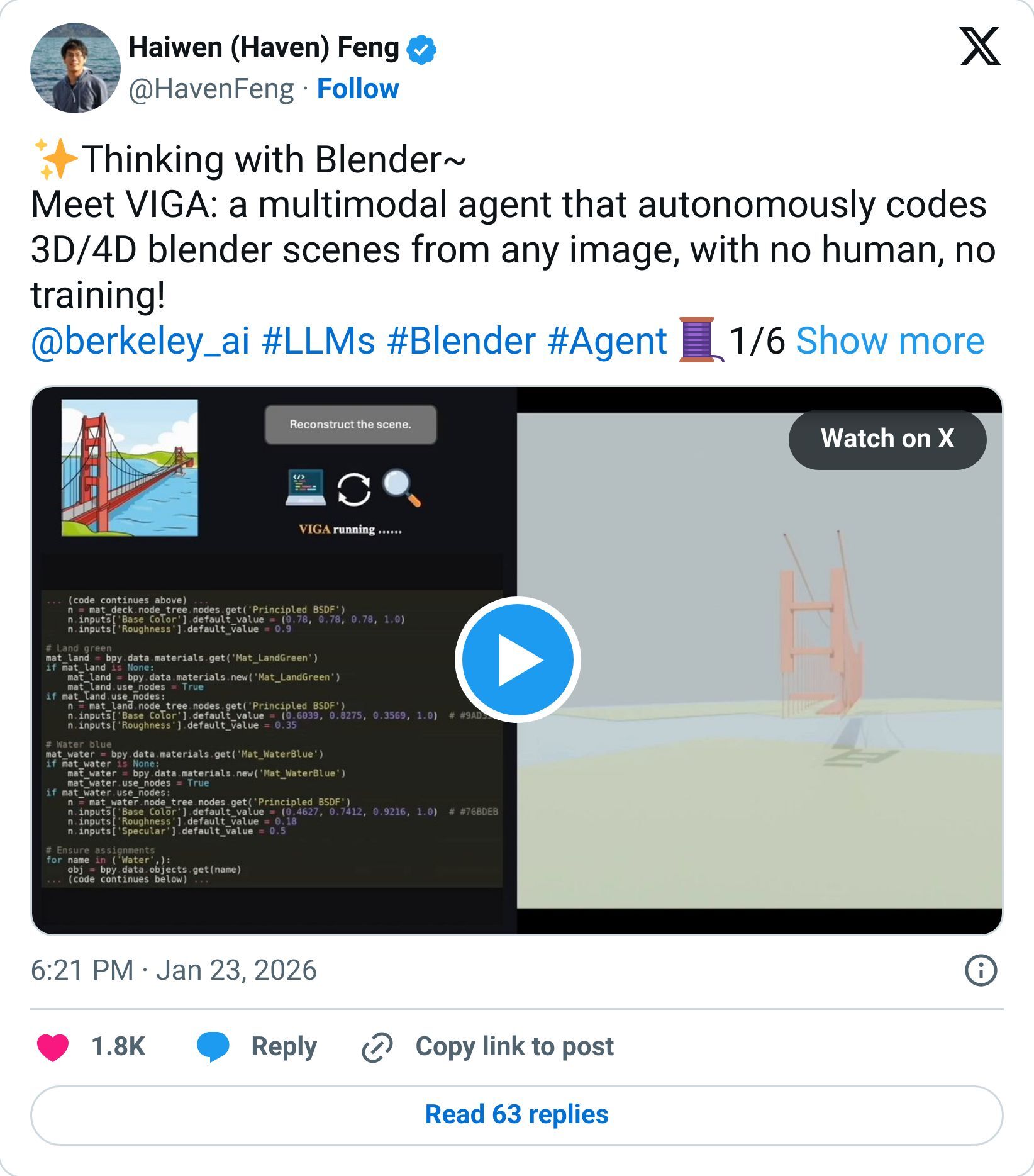
But that just flipped. Claude Code is letting non-coders build actual software. Video tools are letting solo creators make stuff that used to require a team. Even complicated workflows in tools like Blender are being opened to non-technical users via vibe-coding methods.
So what's the new scarce resource? Ideas. Lots of them.
The people who thrive in the next five years won't be the ones with one great concept. They'll be the ones generating dozens of concepts and letting AI help them figure out which ones have legs.
What to do about it:
- Increase your output, not your perfectionism.
- Treat AI as your execution partner.
- Stop protecting ideas like they're precious.
Nonstop Continual (Human) Learning
The Big Idea: Winning as a human in the next five years means improving your brain's system prompt by understanding what's happening.
There's a new AI tool, feature, or capability dropping every week. It's exhausting. And there's a real temptation to just... stop. Pick your tools, settle in, let other people figure out what's next.
But that's exactly the wrong move.
Every hour you spend learning the latest model, the newest workflow, the weird beta feature nobody's talking about yet? That compounds. It helps you understand the next thing.
The gap between people who stay curious and people who "wait and see" is going to get very wide, very fast.
What to do about it:
- Dedicate time to tinkering.
- Follow the builders, not just the commentators.
- Don't wait until you "need" a tool to learn it.
- Check out Federico Viticci's deep dive on Clawdbot for a great example.
Build Your Own Tools… Seriously, You Can Do It
The Big Idea: Start noticing the small annoying problems in your day. Those are your opportunities to participate.
Every time you think "I wish there was an app that..." or "why do I have to do this manually every time?" That's a signal of something.
Something that's driven me crazy for a bit is not being able to do one of those 'slider' previews where you can compare two images. So a few weeks ago, I poked around in Google's AI Studio and built something. It's not done but after a few hours… it's something that I can use.

Even if it's not a commercial product… worse case scenario, you help yourself. Best case, other people are having the same problem. And they want what you made.
The trick is learning to see these issues and understand you can fix them now.
Most of us have gone numb to the small inefficiencies in our daily workflow. We just accept them. But the people building useful stuff right now aren't geniuses… They're just paying attention to what annoys them.
What to do about it:
- Keep a "this is annoying" list.
- Ask "would anyone else need this?"
- Start with embarrassingly small.
This Is The Time To Change Your Mindset…
As harsh as the jobs world looks right now, I firmly believe we're entering a golden age of opportunity for individuals.
But to get there, you need to shift how you see what's possible.
Read more at the AI For Humans Newsletter